

A note to US-based customers: All Lit Up is pausing print orders to the USA until further notice. Read more
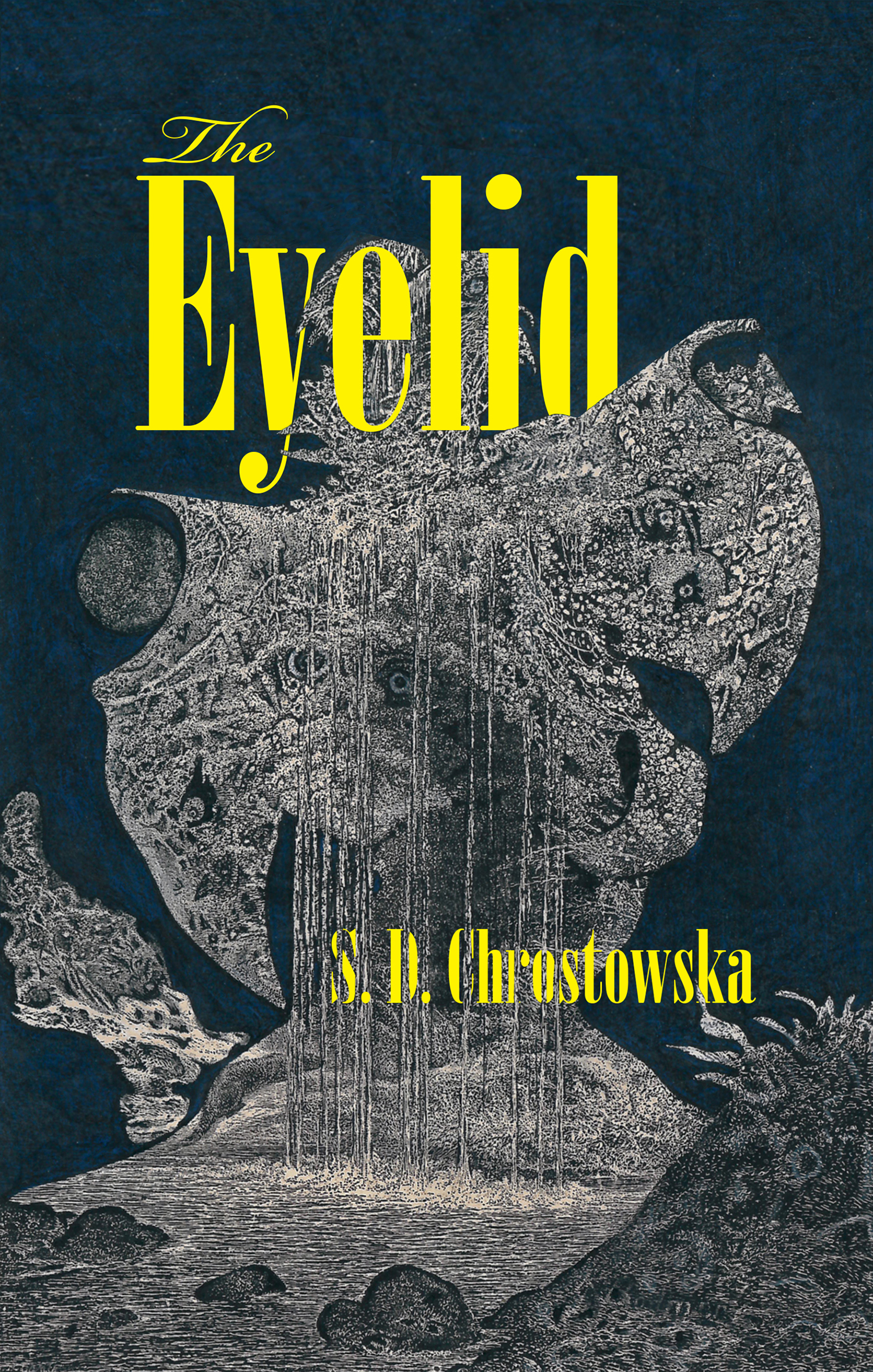

The Eyelid
In Greater America, with sleep under siege, this lucid and prophetic novel of ideas depicts the end of human reverie.
An unnamed, unemployed, dream-prone narrator finds himself following Chevauchet, diplomat of Onirica, a foreign republic of dreams, to resist a prohibition on sleep in near-future Greater America. On a mission to combat the state-sponsored drugging of citizens with uppers for greater productivity, they traverse an eerie landscape in an everlasting autumn, able to see inside other people’s nightmares and dreams. As Comprehensive Illusion – a social media-like entity that hijacks creativity – overtakes the masses, Chevauchet, the old radical, weakens and disappears, leaving our narrator to take up Chevauchet’s dictum that “daydreaming is directly subversive” and forge ahead on his own.
In slippery, exhilarating, and erudite prose, The Eyelid revels in the camaraderie of free thinking that can only happen on the lam, aiming to rescue a species that can no longer dream.
“A slight but quick-witted and thoughtful philosophical parable that falls somewhere between Camus and Gaiman’s Sandman universe.” —Kirkus Reviews
“S. D. Chrostowska’s The Eyelid is a brilliant, visionary satire on the digital mindscape of twenty-first-century late capitalism embodied in the new global state of Greater America. Insomnia is in; dreams are seditious; sleep is outlawed. Lulled by false fantasies projected by Artificial Intelligence (CI in the book), video games, and media collaborators, humans drug themselves to stay awake so they can slave through the now standard twenty-hour work days. Witty, oracular, Surreal, trenchant, politically astute, and often hilarious, The Eyelid is a throwback to the classics of the genre, Jonathan Swift’s Gulliver’s Travels and Samuel Butler’s Erewhon. We are turning into a race of sleep-deprived automatons, Chrostowska warns, increasingly unable to mount political opposition or even dream a different future.” —Douglas Glover

“The novel, of course, is a warning of what is to come or what in large part has already come for us, its readers. Where do the opacities of sleep and the images and tales that our dreams are full of find reference in the world we inhabit?” —Leonardo
“Determined readers will revel in the sheer fecundity of ideas in this fiercely imaginative acid trip of an allegory.” –Publishers Weekly
“A slight but quick-witted and thoughtful philosophical parable that falls somewhere between Camus and Gaiman’s Sandman universe.” –Kirkus Reviews
“The Eyelid spins a rich and rewarding political fantasy out of this anxiety over the colonization of dreams and the subconscious by corporate power.” –Toronto Star
“This is a novel of ideas and warnings, not a simple theoretical thriller that blooms in the mind as an ephemeral bottle rocket only to fizzle and leave the reader seeking the next entertainment.” –The Rupture
“S. D. Chrostowska’s The Eyelid is an exquisite piece of literature which might well become an instant cult book until it makes its way to a much deserved place at the top of any list of utopian-dystopian fiction masterworks.” –Full Stop
“S. D. Chrostowska achieves unexpected buoyancy in spite of the intensity of her material. Permission, certain to be among the most formally adventurous books published this year, will thrill readers of fearless stylists like Blanchot, Barthes, and Anne Carson. In its obsessive intricacy, it evokes even earlier forbears: those wonderfully melancholy European humanists, Thomas Browne and Robert Burton.’ Every Library is a haunted cemetery,’ writes F. Wren, the narrator of Permission. This fine and perplexing novel is itself something between a library and a cemetery, spinning around the hauntings of desire, the confusions of memory, the ambiguities of solitude and, above all, the mystery of writing.” –Teju Cole
“Always provocative, Chrostowska investigates the notion that dreaming itself can be a subversive act.” –Steven W. Beattie, Quill & Quire
There are no awards found for this book.
You must be logged in to submit a review.
Details
Dimensions:
144 Pages
0.46lb0.4in5.0in * 8.0in
Published:
April 14, 2020
Publisher:
ISBN:
9781552454084
Language:
01
Share


No author posts found.


