

A note to US-based customers: All Lit Up is pausing print orders to the USA until further notice. Read more
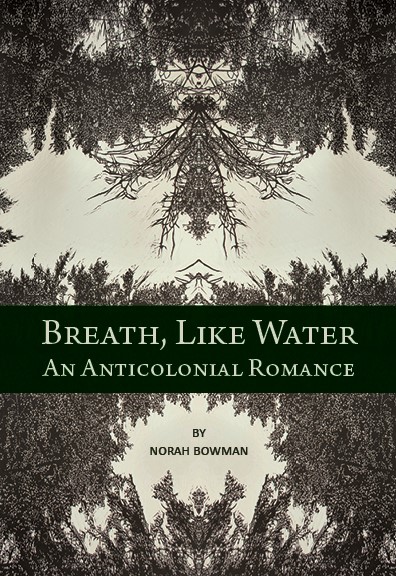
Breath, Like Water
“Look, I come from a line of angry women. / I am not in love with mountains, or rivers, or poetry. / I am in love with Mountain.”
In Breath, Like Water: An Anticolonial Romance the narrator, a settler-colonial hiker, grapples with her attachment to the Okanagan Mountain alongside her desire to honour the Land Back movement of Indigenous peoples and the harmful history of white colonizers. She is critical of her own role in this system, yet cognizant of the lack of power she possesses to return the land to its rightful owners. Instead she walks–hiking the Okanagan Mountain regularly, learning the rhythms of snow, heat, bears, pine trees, mule deer, and ticks–sharing its joys with lovers.
In styles both experimental and familiar, a tangential narrative takes off. Sparked by a mysterious plane crash in 1950, the narrator contemplates a fire-hungry tree-people inhabiting Okanagan Mountain. Blending poetic prose with free verse, Norah Bowman weaves a narrative of magical speculation and natural history to decolonize human-nature relationships and celebrate the spirit of the mountain.

“These poems move on the page like breath and water—sometimes measured, sometimes wild, always essential. True to its anticolonial nature, this is a book of tensions, of juxtapositions that reveal the love and trauma held within landscapes, colonial history, and the human heart. The layers are as tightly wound and beautifully symmetrical as tree rings—ancient spruces and pines destroyed in the Okanagan fire and the new emergent forest, a bi-product of destruction/regeneration. This exquisite offering makes an essential contribution to Okanagan history, Can Lit, and the growing list of LAND BACK literature.”
—Leesa Dean, Trillium-nominated author of Waiting for the Cyclone
“This book drew me in immediately. The author, coming from one side of a culture—European—and eventually understanding the other side–Syilx–as we learn about the history of the Syilx people and how it has been corrupted by the newcomers. The details of her walk allowed me to walk with her and see, feel and experience her journey of linking the human experience to the natural world–it is all connected.”
—Bev Sellars, author of Price Paid: The Fight for First Nations Survival
“Norah Bowman writes, “Breath, like water, finds a way.” These poems, her poetic breath, ‘finds a way’ to seize this complex, heartbreaking romance between settler consciousness and her landscape, her environments, her awareness of what her own settler culture has done to this landscape, and to the Syilx consciousness that exists within this landscape, by importing and imposing anger and violence upon everything that is alive here. What a complicated, impossible story Bowman tries to tell. But amazingly, she does tell it, she does find a way, and the results are both devastating and beautiful.”
—John Lent, author of So It Won’t Go Away
“Breath, Like Water is just the kind of book we need right now: a deeply empathetic exploration of colonial wounds left raw for more than a century, a visceral elegy to the unspoiled natural world and its ancestors, and a meditation on white settlers’ complex relationship with stolen lands. These poems offer a fiercely compassionate way of seeing and being in the world.”
—Corinna Chong, winner of the 2021 CBC Short Story Prize
There are no awards found for this book.
You must be logged in to submit a review.
Details
Dimensions:
72 Pages
7.80in * 5.30in * .30in
100.00gr
Published:
September 17, 2021
Publisher:
ISBN:
9781773860657
Featured In:
Language:
eng
Share


No author posts found.


