

A note to US-based customers: All Lit Up is pausing print orders to the USA until further notice. Read more
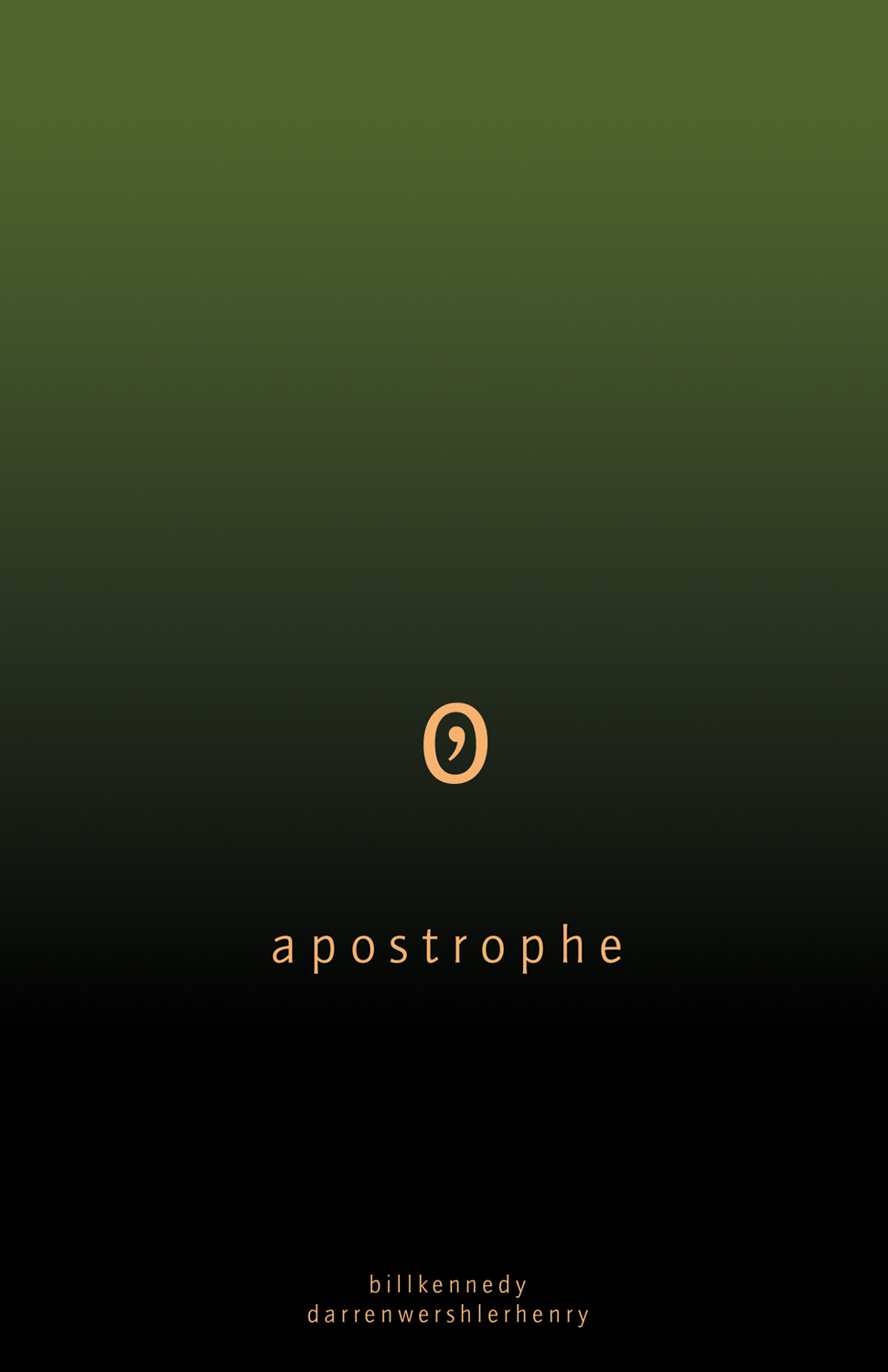

Apostrophe
you are entirely happy with your poem / you are not happy then there is no charge and your deposit is returned / you are totally satisfied with the outcome / you are a man / you are a little confused / you are entirely happy with your poem / you are not happy then there is no charge and your deposit is returned / you are totally satisfied with the outcome …
“Apostrophe” is:
a) a figure of speech in which a person, an abstract quality or a nonexistent entity is addressed as though present
b) a poem written in 1993 in which every sentence is an apostrophe
c) a program — apostropheengine.ca — based on the 1993 poem that hijacks search engines in order to extend the poem infinitely
d) a book of poetry written using the website
The answer: e) all of the above.
Bill Kennedy and Darren Wershler-Henry’s Apostrophe contains all of these things, except the search engine (but you can visit that any time you like). Each line from the original poem has become the title of a new poem generated by the program’s metonymic romp through the World Wide Web. Phrases rub against each other promiscuously; poems and readers alike come to their own conclusions. The results are by turns poignant, banal, offensive and hilarious, but always surprising and always unaffected. In other words, everything a book of contemporary poetry should be, and then some.
Poet and scholar Charles Bernstein has suggested that Apostrophe may be related to Freud’s notion of the uncanny, a somnambulistic drift that appears aimless yet somehow always returns to “you.” Apostrophe is an entirely new kind of poetry: neither stable nor unstable, sections come and go, but the overall shape of the poem remains vaguely familiar, like a trick of memory.


