

A note to US-based customers: All Lit Up is pausing print orders to the USA until further notice. Read more
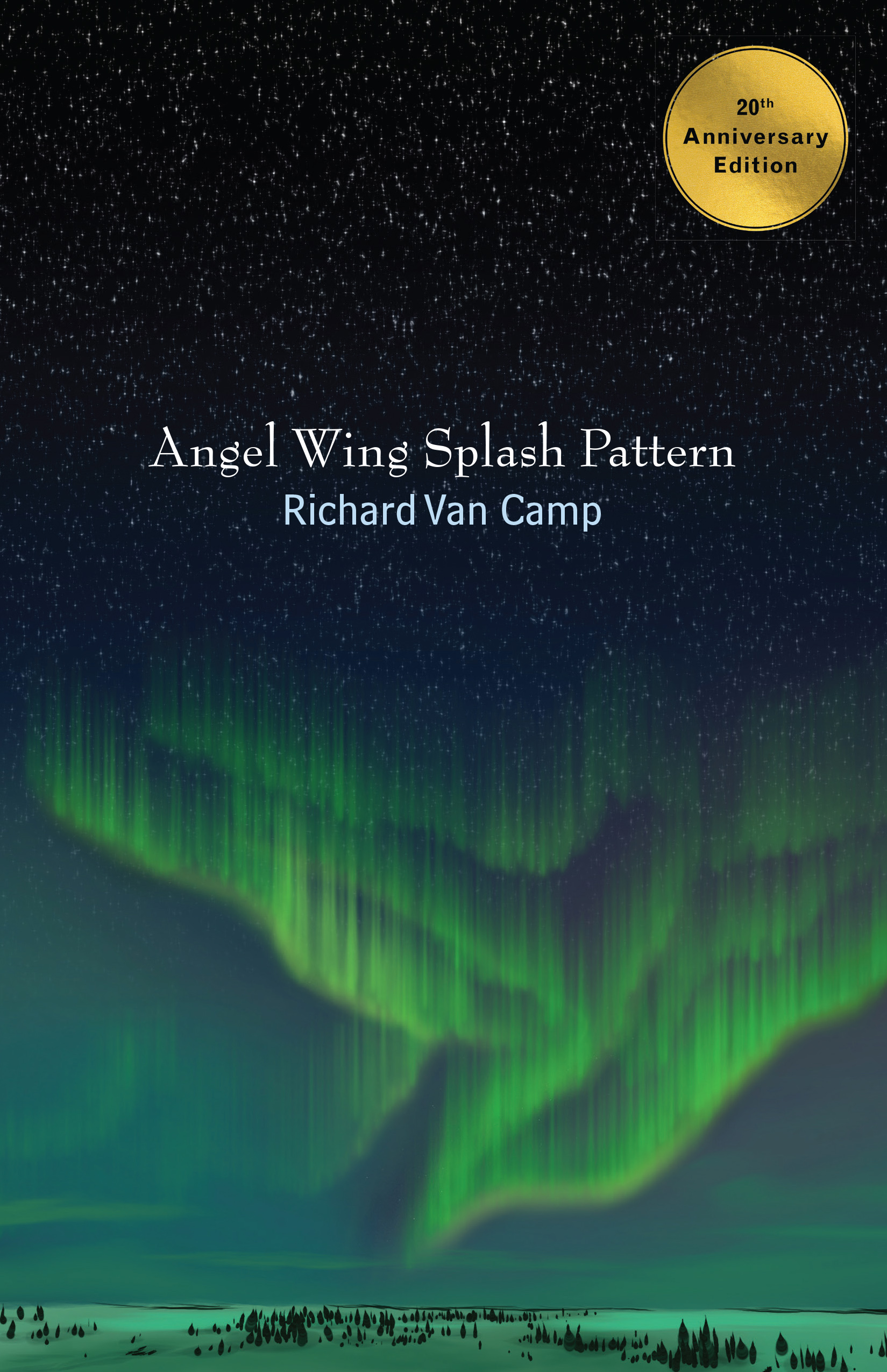

Angel Wing Splash Pattern
With this special 20th Anniversary edition, Richard Van Camp re-releases his first bestselling collection of short stories. There is pain in these stories and there is loss. There is death, but there is also rebirth, and there is always the search from each of the narrators for personal truth. This collection of hilarious and profound stories is where beloved recurring characters Torchy, Sfen, Snowbird, Clarence and Brutus first appeared. Larry Sole from The Lesser Blessed>/i> also appears in this collection, alongside many other characters, all of them linked by themes of hope, the spirit of friendship, and hunger.
Richard has gone on to publish four other short story collections, but Angel Wing Splash Pattern is where his love of the short story—”those perfect universes”—all began. This beautifully redesigned 20th anniversary edition, with a new introduction by the author and two new graphic-novel style stories, proves once again that Richard Van Camp is a master of the short story.

Angel Wing Splash Pattern by Richard Van Camp
Richard Van Camp has a unique way of finding a way into your subconscious. He not so much tells you the stories that come from his part of the universe, but makes you feel them. Every time you finish a Van Camp book, you want to travel to Tłįchϙ territory to meet the amazing people he writes about, and maybe soak up some of that magic he so obviously treasures about his land. The problem with all true storytellers (and Richard certainly is one) is we are frequently burdened with telling the truth, and Angel Wing Splash Pattern tells the truth but in the most delightful ways.
Drew Hayden Taylor, author of Chasing Painted Horses
If a dream catcher could talk, it would say Angel Wing Splash Pattern. In this short story collection, Richard Van Camp’s northern Canadian stories are as visceral as nightmares, yet beautifully wrought with shiny baubles glinting from their webs.
In “Mermaids”, the opening story, Van Camp throws us right into the melee: Drunk and beaten, Torchy stumbles from a tavern into the company of a little native girl, waiting hours in the cold for her mother. Something about her abandonment touches him, and he finds himself telling her the story of why God killed the mermaids. This modern allegory deepens into Torchy’s personal pain at losing his brother, which becomes a motif throughout the book: How, in the context of an idealized past, contemporary life rips away the precious and replaces it with lesser jewels.
In the one Edmonton story, “Sky Burial”, elder Icabus eats doughnuts to sop up the blood leaking inside him. It’s all he can do to keep from crying at havng no one to pass his medicine on to. When a native child, adopted by a white woman, comes to him, he thinks maybe he’s found that person. Nearby, a tropical bird hangs upside-down from its perch, trying to bite its way out of a metal leghold. The pathos of the situation floats in the air like the dull echoes of people hanging around in a large, decaying mall.
There’s more hanging-around in “Let’s Beat the Shit Out of Herman Rosko!”, in which Grant and Clarence stand across the street from Herman’s house, shivering in the snow, smoking cigarettes, trying to talk themselves into beating up the town’s first marriage and sex counsellor, someone they used to harass as kids. In a surprisingly adept and graceful turn, Van Camp gently unmasks male bravado; in the space of a few pages, you not only understand these guys, but like them too.
Van Camp demonstrates this particular talent at much greater length in his novel, The Lesser Blessed, for which he won the 2001 Jugendliteraturpreis, a German literary award.
In Angel Wing Splash Pattern, Richard Van Camp lures you so close to the heat of his characters, yet always with an ice-bit of pain glinting through. Enmeshed in his stories, you come face to face with faceted flashes of the universal struggle to cope with a dazzling, dismaying world.
There are no awards found for this book.
You must be logged in to submit a review.
Details
Dimensions:
148 Pages
8.5in * 5.5in * .75in
0.53lb
Published:
November 30, 2020
Country of Publication:
CA
Publisher:
ISBN:
9781928120117
Language:
eng
Share


No author posts found.

