

A note to US-based customers: All Lit Up is pausing print orders to the USA until further notice. Read more
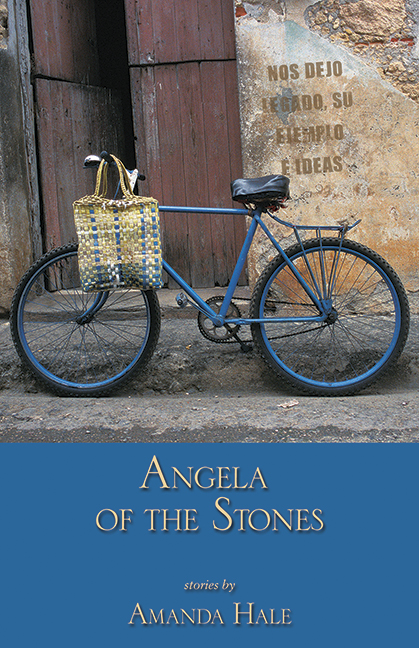

Angela of the Stones
“All of Cuba is a museum now. We live off our old Revolution,” laments Gertrudis, one in a cast of characters teetering on the verge of political change while held in the grip of the past. Cuba is the place where the grandchildren of peasants become consultant surgeons, but also the place where necessity as the mother of invention is put into extreme practise. In Havana, the buildings like the peoples’ dreams, are constantly being restored. But so too in the rural districts, in towns like Baracoa, you will find boisterous people who idolised the Fidel past and continue to mourn his passing while those like Godofredo, born in January 1959 as a victorious Fidel marched into Havana, limps along the streets of Baracoa where he encounters tourists and townspeople while maintaining his anonymity as the peanut vendor. In Amanda Hale’s stories, Cuba comes alive with a gentle humour and through the richly detailed portraits of the families of Baracoa as they struggle with the political changes that are reshaping Cuba.
Meet Daniela who flies from the roof into the arms of her unfaithful husband; Sonia who marvels at the new world of her cell-phone crazy teenagers; Tito, a world away in Miami, who rants about Obama’s handshake with Raúl Castro; and witness a corpse that travels the length of Cuba and back in a nightmare of bureaucracy, all while Ángela huddles for the night on her bench in Parque Central.

The New York Times Book Review calls Sounding the Blood “an ambitious, utterly convincing historical novel . . . “
“The Reddening Path is cleverly structured, with a style that fluctuates between dreamlike poetic imagery and a traditional quest-for-identity narrative … an intriguing look at post-colonial biculturalism set against a moving backdrop of familial love and personal enlightenment.”— Quill & Quire.
“Discovering Amanda Hale is like discovering that there are stars somewhere beyond the reach of city lights and gaudy neon signs . . . a writer who combines the love of the body with the search for the soul in a way that truly evokes the questing spirit of Renaissance Man” —Gillean Chase, Victoria BC blog review of My Sweet Curiosity.
“The integration of the lyrical, factual, and narrative elements, which has been so ambitious in all Hale’s books . . . was thrilling. Pure pleasure to read.” — Amnon Buchbinder review of My Sweet Curiosity
“Written with warmth, compassion and understanding, In the Embrace of the Alligator is one of those rare glimpses into the real Cuba, its people, and its stories.” — Eva Stachniak
“Hale has come to know and understand aspects of Cuban society that tourists in resorts don’t always see, and has used her experiences to create a rewarding collection. Her writing is strong and sensuous.” — Erinna Gilkison, BC Bookworld.
You must be logged in to submit a review.
Details
Dimensions:
168 Pages
8.5in * 5.5in * .44in
300gr
Published:
October 01, 2018
Publisher:
ISBN:
9781771871655
Book Subjects:
Featured In:
Language:
eng
Share


No author posts found.


